Showing posts with label Honda FCX Clarity. Show all posts

Thursday, March 4, 2010

Honda CEO, Mr. Takanobu Ito, speaks at Geneva Motorshow 2010

Good morning, Ladies and Gentlemen. I am very pleased to join you today at the Geneva Motorshow. I would like to talk about Honda's vision of the future, by linking it to our past.

Honda began life more than 60 years ago as a maker of motorcycles. But we weren't strictly a motorcycle company. In the post-war era, the people of Japan needed basic mobility. And the first product Soichiro Honda created was a bicycle equipped with a small engine.

From that humble beginning, we now offer many different products to meet the needs of our customers: Cars... Motorcycles... Lawnmowers... Marine Engines...

One of our smallest creations is the U3-X, the omni-directional electric monocycle you have just seen. And the largest one is also our fastest... the HondaJet.

While the products have changed, our fundamental goal as a company has remained the same for the last 60 years and beyond. We will continue to supply mobility products that offer our customers fun and convenience. And to achieve this, we must create mobility that also meets society's green needs ... with a dramatic reduction of CO2 emissions.

FCX Clarity and SHS
On your right is the car of the future made today. FCX Clarity runs on electricity generated onboard by the reaction of hydrogen in the tank and oxygen in the air. It emits only water, and has a driving range of 460 kilometres. We believe that fuel cell electric vehicles are the ultimate solution to reduce CO2 emissions. We welcome the question - "Where will you get the Hydrogen?" In fact, Honda is leading the way in developing new technologies for hydrogen refuelling.

Recently, we developed a very compact solar hydrogen station. By creating a new high differential pressure electrolyser, Honda engineers were able to completely eliminate the compressor. This new system is 25 % more efficient, and is compact enough to be used in the home. So, my answer to the question is, "why not produce hydrogen in your home?"

3R-C and EV-N
On your left are 2 Honda design studies for zero-emission city commuter cars. Congested city traffic is one of the leading causes of vehicle emissions. We must make city transport cleaner. EV-N is a design study of the smallest city car that is capable of accommodating 4 people. 3R-C is another design study for city commuters with 3 wheels for one driver. Both are intended to be driven by electric motors.

Hybrid Expansion
In the days ahead, we will further expand our hybrid line-up. Hybrid is the most important and effective technology to cut CO2 emissions today. The Jazz hybrid will be introduced in Europe early next year. So, with Civic Hybrid, Insight, the new sporty CR-Z, and soon Jazz Hybrid, Honda aims to maximise the fuel efficiency of mobility today ...while we work towards the goal of zero-emission mobility for tomorrow.

CR-Z
And now, it is my pleasure to introduce to you the latest hybrid model from Honda... CR-Z. This unique car combines a hybrid system with a 6-speed manual transmission, in a dynamic coupé styling. It is for people who seek new values in a car. For people who want fun-to-drive spirit and lower CO2 emissions.

In the late 80s, I was in charge of body development for the Honda NSX, the world's first all aluminium, mass production sports car. Our challenge was to build a car with all-aluminium construction to improve both efficiency and dynamics. With the CR-Z, the challenge of our engineers was still to create a car with great dynamics and fuel efficiency.

CR-Z is a new kind of hybrid. Of course, it is a hybrid car that uses petrol and electricity. But more than that, it is a hybrid of a sporty car and an eco car. Given the different driving characteristics offered by the 3-mode drive system, once you are behind the wheel, you can choose sporty driving or eco driving ...at your will.

I am proud to present to you the CR-Z... a new hybrid that offers both fun and fuel efficiency in one dynamic package!
Thank you for your attention.
Source;

Wednesday, January 27, 2010

Honda Begins Operation of New Solar Hydrogen Station

01/27/2010 - TORRANCE, Calif. -
Honda today began operation of a next generation solar hydrogen station prototype at the Los Angeles Center of Honda R&D Americas, Inc., intended for ultimate use as a home refueling appliance capable of an overnight refill of fuel cell electric vehicles.

Designed as a single, integrated unit to fit in the user's garage, Honda's next generation Solar Hydrogen Station reduces the size of the system, while producing enough hydrogen (0.5kg) via an 8-hour overnight fill for daily commuting (10,000 miles per year) for a fuel cell electric vehicle.

The previous solar hydrogen station system required both an electrolyzer and a separate compressor unit to create high pressure hydrogen. The compressor was the largest and most expensive component and reduced system efficiency. By creating a new high differential pressure electrolyzer, Honda engineers were able to eliminate the compressor entirely - a world's first for a home use system. This innovation also reduces the size of other key components to make the new station the world's most compact system, while improving system efficiency by more than 25% (value calculated based on simulations) compared to the solar hydrogen station system it replaces.

Compatible with a "Smart Grid" energy system, the Honda Solar Hydrogen Station would enable users to refill their vehicle overnight without the requirement of hydrogen storage, which would lower CO2 emissions by using less expensive off-peak electrical power. During daytime peak power times, the Solar Hydrogen Station can export renewable electricity to the grid, providing a cost benefit to the customer, while remaining energy neutral.

Designed for simple, user-friendly operation, the intuitive system layout enables the user to easily lift and remove the fuel hose, with no hose coiling when the hose is returned to the dispenser unit.

Engineered for an 8-hour, slow fill for overnight refilling of a fuel cell electric vehicle, the home-use Solar Hydrogen Station would replenish the hydrogen for a typical daily driving, meeting the commuting requirements of many drivers. As with the previous generation system, the hydrogen purity from the new station meets the highest SAE (J2719) and ISO (14687) specifications.

Installed at the Los Angeles Center of Honda R&D Americas, the new Solar Hydrogen Station will employ the same 48-panel, 6.0kW solar array that powered the previous system. The array utilizes thin film solar cells composed of copper, indium, gallium and selenium (CIGS) produced by Honda Soltec Co., Inc., a wholly-owned subsidiary of Honda that was established for the mass production and sales of solar cells capable of efficient renewable electricity generation. Honda's unique solar cells reduce the amount of CO2 generated during production as compared to conventional solar cells.

Designed to support the needs of the future owners of fuel cell electric vehicles, the Honda Solar Hydrogen Station was also designed to complement a public network of fast fill hydrogen stations. The Honda FCX Clarity electric vehicle is fast fill capable and offers an EPA-estimated driving range of 240 miles. With fast fill public stations providing 5-minute fueling time for longer trips, and the opportunity of convenient nighttime slow filling at home using a solar station with a Smart Grid connection, the Honda FCX Clarity can cover a wide range of driving demands from the daily commute to weekend trips.

A key strategy in creating a solar hydrogen station for home-use was to create a new lifestyle with convenient, clean, energy-efficient and sustainable home refueling, by addressing the need for refueling infrastructure that can advance the wider use of fuel cell electric vehicles by consumers.

The combination of a fuel cell electric vehicle and the solar hydrogen station could help lead to the establishment of a hydrogen society based on renewable energy, resulting in a major reduction of CO2 emissions and greater energy sustainability.
Honda began operation of its first Solar Hydrogen Station at the Los Angeles Center of Honda R&D Americas in 2001:

July 2001: 3-unit system with hydrogen storage begins operation.
October 2003: new 2-unit system with an original Honda electrolyzer and a new solar array utilizing prototype Honda CIGS solar cells offers improved system efficiency.
August 2008: solar array fitted with mass production CIGS cells from Honda Soltec Co., reducing the size of the array by 20% and further improving photo voltaic (PV) energy efficiency.
January 2010: new single-unit station begins operation, improving to world's best system efficiency - increasing the efficiency by more than 25% (value calculated based on simulations) compared to the previous solar hydrogen station system, for a world's highest system efficiency.

About Honda R&D Americas, Inc.Honda R&D Americas, Inc. (HRA) is responsible for creating advanced technologies and products in the U.S. that provide new value to Honda and Acura customers. HRA began R&D operations in the U.S. in 1975 with market research activities in California, and has steadily grown its capabilities over the past 35 years to include all aspects of new vehicle design and development, as well as taking a leading role in the advancement of leading-edge safety and environmental technologies.

Today, Honda operates 15 major R&D facilities in the U.S. with more than 1,300 designers, engineers and support personnel engaged in the development of automobiles, motorcycles and power equipment products for North America and global markets.

HRA's major centers include the Los Angeles Center (Torrance, CA), responsible for market research, concept development and styling design; the Ohio Center (Raymond, OH) responsible for complete product development, testing and support of North American supplier development; and a dynamic test facility in Ohio; and the North Carolina Center (Swepsonville, NC) responsible for power equipment R&D.

Source;
http://www.hondanews.com/categories/1097/releases/5366

Saturday, January 2, 2010

The Honda FCX Clarity, the world’s first commercially available, zero-emission hydrogen car;

Here's a good read on the Honda FCX Clarity....
Honda’s new gas guzzler
Nowadays, emission-free motoring is the ultimate Hollywood accessory.

Even hybrids, like the Toyota Prius, don’t really cut it anymore. Which probably helps to explain why Arnold Schwarzenegger, the man who was once famed for his love of environmentally-unfriendly Hummers, happily champions the green cause. Indeed, the politician is now the power behind California’s so-called Hydrogen Highway, the busy thoroughfare that runs between San Francisco and San Diego.

You’ll find the epicentre of LA’s piece of that road just off the 405 freeway, one of the world’s most polluted motorways, where a Shell petrol station equipped with a hydrogen pump is the main refuelling hub for the rare Honda FCX Clarity.

The Honda FCX Clarity, the world’s first commercially available, zero-emission hydrogen car, is currently only available to lease in Japan and California, primarily because they’re the only places where hydrogen is relatively available. The cost for a three-year lease in either market is approximately $600 (Dh2,200) per month, which includes maintenance.

Before I am let loose behind the wheel of the vehicle Honda describes as the “sedan of the future”, I’m shown how to fill up the Clarity, which proves fast and simple. In fact, in less than five minutes, I have enough energy onboard for more than 320km of roaming. It cost almost $30 to fill the tank – about the same price as it would to fill the tank of a similar-sized car with petrol.

This Honda is an amazing piece of wizardry. It’s powered by a compact and efficient electric motor, which is fed by a fuel cell that converts hydrogen from the tank and oxygen from the air into electricity. The only byproduct of this process is water vapour, which comes out of the exhaust pipe. The hydrogen is compressed to 5,000psi and stored in a tank under the boot.

The FCX’s Vertical Flow fuel cell stack has been designed to be compact, leaving more space for occupants. The car is also designed to recover energy that would otherwise be lost while braking or decelerating, which is stored as electricity in a lithium-ion battery pack found under the rear seat, allowing for more interior and boot space.

The Clarity’s range is fine, too, if you know you are going to be close to another filling station.

Currently, one of the biggest hurdles in selling hydrogen-powered vehicles is the lack of infrastructure to make owning one as convenient as owning a petrol-powered car. As yet, hydrogen does not give you the complete freedom of the open road.

So with all that in mind, I map out our road test route. Carefully.

We will head up near Burbank, then across the Santa Monica Mountains to Malibu, down the Pacific Coast Highway and through Venice. The return leg will be up the infamous 405 to Los Angeles International Airport, where the first hydrogen station opened, for a substantial but sustainable meal at the city’s hippest eco eatery.

Any fool could drive the Clarity – just flick the switch into Drive with the steering column-mounted lever and the car moves off, albeit with little of the grunt you’d expect from a big petrol engine.

It gets to 100kph in about 10 seconds and reaches a maximum speed of 160kph. The ride quality, though, is as good as a Rolls-Royce.

For a car for the future, the Clarity is remarkably contemporary to drive. For some reason I’d expected an experience nothing like the norm but, despite the cutting-edge power source, the delivery of power is familiar.

It may be a bit breathless compared with the sprightly characteristics of most Hondas, and unnaturally quiet (something we will all have to get used to with one form of alternative power or other) but Honda has retained its company DNA for ride and handling.

Sadly though, the interior is dull. I’d have liked to feel as if I was in something more space shuttle than old people’s home.

But the Star Trek element is at least evident in a series of gauges and indicators that pulsate in vibrant electro blue rather like a 1990s Japanese boom box. One of the key indicators shows hydrogen reserves. I thought it would be like watching sand slide through an egg timer, seeing the sole power source for the car evaporate with every twitch of the accelerator. But no, it dropped gently – until I got on the motorway. Then it started plummeting.

There’s nothing like not knowing where your next filling station is coming from to focus the mind. It’s great having a hydrogen car but greater still when there’s enough places to refuel.

Heading out into traffic, I felt like a star. Kids, truckers and even muscle car drivers flagged me down and gave me the thumbs-up. The Clarity doesn’t look all that different from a normal car, but apparently people still notice it.

Sun kissed and sand fringed, Santa Monica and Venice Beach are in fact LA’s green belt. Here, sustainability sells.

Surfboard and skateboard makers Arbor use bamboo not only for their wave and street riders but also for clothing. It’s no gimmick. Surfers might want the cleanest of water, but would never relinquish speed across the surf or pavements for sustainability.

Serving in Venice today is the Green Truck to Go, a mobile kitchen powered by biofuel and solar-power, that dishes up meals of local produce from the side of the road. I grab a fantastic tortilla wrap to keep myself fuelled.

“LA is really a green place at heart. Only because we need our cars so much is that compromised,” says Green Truck founder Mitchell Collier, whose regular customers include the film director Ridley Scott and the celebrity photographer Annie Leibovitz. “It is becoming normal now in LA to choose the green option, given one.”

Our last stop is for a bite at Akasha, LA’s top organic restaurant. Pierce Brosnan and Robert Redford swing by. Miley Cyrus, who was filming in studios at Culver City, also makes an appearance.

“I’d like to say we are doing something new,” says Akasha Richmond. “But go back to Hollywood in the 1930s and health food and green living were all the rage then. The Germans brought their organic living with them to LA and Hollywood lapped it up.

“The difference now is that so much of that has been diluted that the green movement has a greater fight to get its head above water. But the immediate influence of stars and their eco beliefs has been tremendous.”

It’s obvious that Californians are serious about going green, which makes it obvious why Honda chose the Golden State as its Clarity test bed. With the success of the hydrogen car here, one can only wonder how soon the Clarity will be seen in driveways in the rest of the US states – and beyond.

Source;
http://www.thenational.ae/apps/pbcs.dll/article?AID=/20100102/MOTORING/701019950/1247/life

Tuesday, November 17, 2009

Fuel cell vehicles finish 707-mile demonstration run in Japan


Toyota, Nissan and Honda all participated in a fuel cell demonstration run in Japan last week. The three automakers brought their most advanced hydrogen fuel cell vehicles out for the two-day trip from Tokyo to Fukuoka with an overnight stop in Osaka. The driving teams piloted a Honda FCX Clarity, a Nissan X-Trail FCV and a Toyota Highlander FCHV-adv. Back in 2007, a Toyota FCHV traveled from Osaka to Tokyo on one tank of H2.
Over the course of the trip the three vehicles covered 706.5 miles and consumed 28.8 kg of hydrogen. That works out to an average of 73.6 miles / kg. One kg of hydrogen has roughly the energy equivalent of one gallon of gasoline, so the mileage works out to about 73-74 mpg.
The drive was organized by the Japan Hydrogen and Fuel cell project. While all three of the automakers are developing plug-in battery electric vehicles, all three also continue to work on fuel cells. Both Toyota and Honda maintain that they feel hydrogen remains the best long term solution for full function vehicles.
Source;

Tuesday, October 20, 2009

Tokyo Motor Show Preview: Honda

CHIBA, Japan — When it comes to hybrid cars, Honda is still looking for a car that will trump its archrival, Toyota, and its perennial best-selling Prius.

Its last couple of efforts, the Civic Hybrid and Insight, haven’t quite managed to dethrone the Prius, although each has been a modest sales success. Honda hopes to take the hybrid market in a slightly different and new direction with its latest hopeful, the CR-Z two-seat sports car, which will be introduced at the 2009 Tokyo Motor Show.

The CR-Z concept shown in Tokyo is essentially now in production form. The car is scheduled to go on sale next spring in the United States and as early as February in Japan.

The attraction of the CR-Z, according to Honda, is high performance coupled with good fuel economy. Pricing is also an issue, but that hasn’t been announced yet. Honda promises it will be “affordable.” Figure on something costing about $25,000.

The CR-Z evokes memories of the CRX, a cult favorite of the 1980s.

The car’s designer, Takaski Nagura, said, “We want to take sporty cars in a new direction. We want to make the image healthier.”

Power comes from a 1.5-liter version of Honda’s Integrated Motor Assist hybrid system. (The Civic and Insight use 1.3-liter systems.) Instead of the usual, boring automatic or CVT transmissions, the CR-Z will offer a 6-speed manual.

The CR-Z is the highlight of what promises to be an unusually eclectic Honda display — even by Tokyo’s traditionally whimsical standards. For the first time, because of consolidations of exhibitors at the show, Honda’s automotive products will be joined by everything else Honda makes. This is will include motorcycles, garden tillers and generators. The various motorized machines will be powered by electricity, gasoline, hydrogen and even butane.

Vehicles include the Hello! mobility device, the latest FCX Clarity hydrogen fuel-cell prototype, a unicycle personal mobility machine called the U3-X, 2- and 4-wheel scooters and the quirky EV-N.

The EV-N is a battery-electric minicar concept, with sort of an odd retro theme – although it is difficult to relate it to anything that has come before.

Honda is also showing a concept minivan called the Skydeck. It features seating for six, a glass roof, scissor doors and an far-out interior you will likely find only at an auto show — or a Tokyo love hotel. More importantly, the Skydeck suggests a future version of an Odyssey-style minivan that could be powered by a hybrid powertrain.

Source;
http://wheels.blogs.nytimes.com/2009/10/19/tokyo-motor-show-preview-honda/

Thursday, September 10, 2009

Honda FCX Clarity still on track! Coming by 2015…

Only 10 examples of the Honda FCX Clarity are presently on the road since its introduction last year. Despite that, Honda says that it is on track to meet its early sales goals for the hydrogen fuel cell vehicle. Honda targets that by 2015, it will be able to offer the FCX Clarity to consumers.

However, until it is able to bring the production costs to an affordable level, it is leasing the cars to select customers in California and Japan. Honda also faces the challenge of developing an accessible fueling infrastructure. Honda had hoped to lease 200 examples by 2012, but claims today that it’s still on pace. Sachito Fujimoto, the chief project manager for the FCX program, said that it will maintain its target of 200 cars and that he would like to make “fuel cell vehicles for the ordinary motorist.” He also talked about making the age of the fuel cell cars begin as early as possible. He said that Honda has tackled a number of issues preventing such vehicles from reaching the market, but still has an arduous task ahead. “The four stages of the five in total are behind us,” Fujimoto said. “We’re now at the beginning of the last and the steepest path to the top.” Among the issues that have yet to be resolved relate to the materials and process used in assembling a fuel cell stack, along with promoting a refueling infrastructure.

Source;
http://www.4wheelsnews.com/honda-fcx-clarity-still-on-track-coming-by-2015/

Monday, August 17, 2009

Honda remains in driver's seat of fuel-cell cars

More fuel cell news....
Honda Motor is backing hydrogen power for the cars of the future, waving aside a decision by the Obama administration to drop the so-called fuel-cell technology in favor of battery-run vehicles.

"Fuel-cell cars will become necessary," said Takashi Moriya, head of Tokyo-based Honda's group developing the technology. "We're positioning it as the ultimate zero-emission car."

Honda, the only carmaker to lease hydrogen-powered autos to individuals, opened a production line last year in Tochigi prefecture to make 200 fuel-cell FCX Clarity sedans, the model being leased in a trial in Los Angeles.

The Obama administration sought to eliminate hydrogen-station funding and instead lend $1.6 billion to Nissan Motor and $465 million to Tesla Motors to make electric cars, and give $2.4 billion in grants to lithium-ion battery makers.

"Honda has a propensity to think very long term," said Ed Kim, an analyst at AutoPacific in Tustin, Calif. "It's also part of the company culture that if they've made a decision they think is correct, they'll really stick with it."

Honda is not alone. Toyota Motor, Daimler AG, General Motors and Hyundai Motor say hydrogen, the universe's most abundant element, is among the few options to replace oil as a low-carbon transportation fuel.

U.S. Energy Secretary Steven Chu said in May his department would "be moving away" from hydrogen as it's unlikely the U.S. can convert to the fuel even after 20 years. Nissan Chief Executive Carlos Ghosn predicts electric vehicles may grab 10 percent of global auto sales by 2020. Honda hasn't announced plans for a battery-powered car.

Hydrogen, made mainly for industrial use from natural gas, costs about $5 to $10 per kilogram for vehicles in California, more than double an equivalent amount of gasoline. The Energy Department estimates future prices for hydrogen will fall to $2 to $3 a kilogram, Toyota said.
Toyota President Akio Toyoda said Aug. 5 his company plans consumer sales of fuel-cell cars within six years. Toyota, like Honda, is making "exponential progress" with fuel cell technology, Justin Ward, manager of Toyota's U.S. advanced powertrain program, said in an interview.

Battery-powered electric cars are further along in the market. Mitsubishi Motors started selling the i-MiEV last month. Tesla sells a $109,000 Roadster and Nissan unveiled its first electric car, the Leaf, this month. It plans limited sales of the model in Japan and the United States next year.

Honda says hydrogen vehicles match the refueling style drivers are used to: filling up in minutes at a service station. Nissan's Leaf recharges fully in 30 minutes with a fast-charger, or up to 16 hours on a household outlet, said Tetsuro Sasaki, senior manager of Nissan's battery test group.

A budget crisis slowed plans for more hydrogen stations in California, home to the biggest fleet of cars using the fuel. At the federal level, Chu sought $333.3 million in May for battery and advanced gasoline autos in the 2010 budget, up 22 percent. Hydrogen funds were cut 60 percent to $68 million, slashing money that would have gone to transportation projects.

The Clarity is available in the United States only in Los Angeles, where drivers can use about 16 hydrogen stations. The 5- passenger car has a top speed of 100 miles an hour and goes 240 miles, more than double the 100-mile range of Nissan's compact electric car. Through July, Honda leased cars to 10 drivers for $600 a month.

One problem for Honda is the need for a network of hydrogen filling stations.
"We cannot do infrastructure alone," Moriya said. "We've been developing the cars on our own without government support."

The Senate and House voted in July to restore the funds. President Barack Obama must approve the final budget.

Honda and Toyota will have to reduce production costs to win over consumers. Fuel cells need more platinum -- a precious metal that costs more than $1,200 an ounce -- and current durability is half that of gasoline engines, according to Moriya.

Honda plans to offer hydrogen-powered cars at costs comparable to midsize gasoline autos by 2020. Honda said its 2005 hand-built predecessor to the Clarity cost about $1 million. Moriya wouldn't discuss the Clarity's price.

Honda engineers in Tochigi are trying to trim costs. For 13 months, technicians have worked in a semiconductor-style clean-room, coating rolls of plastic film for fuel-cell membranes. Nearby, a press stamps stainless-steel plates that will grip the material. Hundreds of the cells are then sealed in a metal case, forming the fuel-cell stack.

Honda's hydrogen push has been undermined by plunging sales in the United States, its main market. Last quarter, profit at Japan's second-largest carmaker fell 96 percent to 7.5 billion yen ($79 million). Its research budget is 515 billion yen this fiscal year, down 8.5 percent. Funds for fuel cells were cut and some spending shifted to other "priorities," Moriya said, without elaborating.

Honda probably spends "a few tens of billions of yen" a year on fuel cells, said analyst Mamoru Kato at Tokai Tokyo Research Center in Nagoya.

"Maybe, just maybe, fuel cells will be the future," said Edwin Merner, who helps manage about $3 billion at Atlantis Investment Research in Tokyo. "And if you're not in there, then you have a big disadvantage."

Source;
http://www.nj.com/business/index.ssf/2009/08/honda_remains_in_drivers_seat.html

Thursday, August 13, 2009

Honda: Fuel cells offer "the ultimate zero-emission car"

Honda is not yet ready to concede victory in the eco-friendly automobile wars to the battery electric car. Instead, Honda will continue developing its hydrogen fuel cell technology. Says Takashi Moriya, head of Honda's fuel cell operations, "Fuel-cell cars will become necessary. We're positioning it as the ultimate zero-emission car.

"While Honda is the only automaker in the States that's actually put hydrogen-powered vehicles in the hands of paying consumers (GM's Project Driveway loaned citizens a fuel cell vehicle for free for a short while), it's clear that the Japanese automaker isn't making any money on the FCX Clarity now and likely won't any time soon. Fuel cells are expensive pieces of technology, partly due to their high concentration of precious metals like platinum.

Despite the shortcomings of current hydrogen technology – which, in addition to the aforementioned high price of the vehicle itself, include difficulties in capturing the gas in an environmentally-friendly manner, storing and transporting the gas and an inadequate infrastructure – Honda believes its investment will one day pay off. In fact, Honda says it plans to have hydrogen-powered cars on the market by 2020 at costs comparable to cars running on gasoline. Toyota has said it's hydrogen car, due in 2015, will be priced "shockingly low."

Source;
http://green.autoblog.com/2009/08/12/honda-fuel-cells-offer-the-ultimate-zero-emission-car/

Friday, May 29, 2009

Schwarzenegger gives shout out to Honda, just like Obama's nod to Ford

I never thought I'd see the day that Arnold drove a Honda.... Strange times indeed!
On opposite coasts, two of the nation's best known political figures have been lauding their cars.
First, President Obama told Ford CEO Alan Mulally and a large gathering in the White House last week how much he misses the Ford he left behind in Chicago. It's still waiting for him, he said. “By the way, I just want to mention, I think I still have my Ford parked in Chicago. It’s a Ford hybrid. It runs great. You guys should take a look,” he was quoted by TheNew York Times as having said. Mulally "broke into a wide grin and pumped his fist enthusiastically."

Then yesterday, California Gov. Arnold Schwarzenegger, who happened to have been in the Rose Garden that day, gave his own shout out to Honda at an event in Los Angeles to promote hydrogen-powered vehicles. He praised a Honda FCX Clarity hydrogen fuel-cell car that has been given to his family to try out."I just got the Clarity," he said. "We're all fighting over who is driving it." He said his daughter seemed most enthusastic about it.

A Honda spokesman, Kurt Antonius, said the car was loaned to the governor for a few days, but had since been returned.

That's Schwarzenegger in the photo at top at the event in front of the Clarity. The woman to his left is Clarity driver Q’orianka Kilcher, who starred as Pocahontas in the 2005 film The New World. She has become an advocate for fuel-cell cars.

Honda's CEO wasn't around for Schwarzenegger's nod, but it was pretty clear he would have pumped his fist as well.

Here's another well known celebrity that drives a Honda FCX Clarity.
Back in the day....

Source;
http://content.usatoday.com/communities/openroad/post/2009/05/67349725/1

Friday, May 15, 2009

Toyota could have hydrogen fuel-cell car on the road by 2014

Hmmm, Honda might just be on to something with this Hydrogen business....
Honda's FCX Clarity fuel cell vehicle has grabbed lots of headlines, as has BMW's combustion-powered Hydrogen7 and Mazda's rotary RE line of vehicles, including the RX-8. But Toyota is working on a hydrogen fuel cell vehicle too, and it could be on the streets by 2014.

Well, the streets of California at least. The company had previously released plans to have a hydrogen fuel-cell vehicle on the road by 2015, but that schedule has been bumped up a year to meet the incentives within California's Zero Emissions Vehicle mandate.

“So much of what happens is directly related to the California ZEV mandates — they’re followed by at least 14 states, and they affect nearly half of the cars on the market in the United States. Phase IV of the mandates covers model years 2015 through 2017, so that means we could begin complying in late 2014," John Hanson, a Toyota spokesperson, told the New York Times.

California's ZEV scheme has previously influenced Toyota and other carmakers, including General Motors, to introduce zero-emissions vehicles, including the RAV-4 EV and the much-discussed EV-1.

This time around, the monetary benefits to California's program are such that it's now a valid business case for Toyota to build the hydrogen fuel-cell car.

Source;
http://www.motorauthority.com/toyota-could-have-hydrogen-fuel-cell-car-on-the-road-by-2014.html

Monday, May 11, 2009

Car and Driver: We Talk With The Third Lessee of a Honda FCX Clarity - Interview

BY AARON ROBINSON June 2009

Who: Jim Salomon, 52, Builder
What: Third person to receive a Honda FCX Clarity hydrogen fuel-cell car
Where: Newport Beach, California

What was your first car?
I hate to say this, but it was a 1957 Nash Metropolitan.

Did girls laugh at you in high school?
Uh, sort of, yeah. It was a three-on-the-tree, turquoise and white. I picked it up for 50 bucks, and it was like brand-new.

With what can you compare the Clarity?
I have to compare this car with my Ford GT, but it’s such a totally different driving experience. The lack of shifting. The lack of gears. It’s got a lot of torque, which surprises me for an environmentally friendly car.

Are you going to sell any of your four gasoline-powered cars now?
Not all, but probably some of the modern ones. This car replaced a Mercedes S550. I do not like driving that car anymore. When I got the Clarity, I drove it for about three weeks. Then I jumped into the Mercedes to run a quick errand. It felt like there was an anchor tied to the bumper. I always thought the Benz had good pickup, but the Clarity feels like you’re devoid of gravity.

Do you know how the fuel cell works?
I’m not a scientist, but I am mechanically minded. You basically have an onboard generator, which is the fuel cell, and it takes hydrogen through the fuel-cell membranes, which are made up of palladium and other metals, which creates a reverse electrolysis reaction, which creates electricity to power the motor.

What’s the range?
Honda says 270 miles; I’ve been getting 220. I drive the car hard. I’ve gotten it up to 100 mph.

This car is leased from Honda [$600 per month; 36-month fixed-term, no-option lease]. What happens if you crash it?
They never said anything about that. The lease includes everything—brakes, tires. I guess collision, too. You can’t take it to Maaco. I definitely do not want to be the first Clarity driver to crack up a car. I heard the press crashed one.

It wasn’t us.

Source;
http://www.caranddriver.com/reviews/hot_lists/high_performance/features_classic_cars/we_talk_with_the_third_lessee_of_a_honda_fcx_clarity_interview

Monday, April 27, 2009

Develop Plug-In Autos as Obama Alters U.S. Policy

April 27 (Bloomberg) -- Honda Motor Co., the only company selling hydrogen-powered cars to U.S. drivers, may also develop plug-in models as U.S. policy shifts to favor battery-powered autos.

Honda, which began leasing hydrogen fuel cell FCX Clarity sedans in Los Angeles last year, still sees hydrogen as the best long-term alternative to gasoline as a fuel that can cut carbon exhaust tied to global warming, President Takeo Fukui said in an interview. Still, the company will respond to a push by the Obama administration for carmakers to sell plug-ins, he said.
“We understand the situation, in terms of government and incentives,” Fukui said April 23 in Detroit. “Naturally, we’re going to have to accommodate that too.”

General Motors Corp., Toyota Motor Corp. and Nissan Motor Co., and startups Tesla Motors Inc. and Fisker Automotive Inc., are rushing out cars that can be recharged at electrical outlets as the U.S. moves to tighten fuel-economy and greenhouse gas rules. Honda has yet to announce plans to sell one, citing high costs for the lithium-ion batteries needed to power them and poor range.
“We are thinking about plug-in hybrids, but we aren’t thinking about commercializing one right away,” Fukui said.

Honda, Japan’s second-largest carmaker, last week began building a lithium-ion battery factory with joint-venture partner GS Yuasa Corp. in Japan’s Kyoto prefecture to make packs for gasoline-electric hybrid cars made by Tokyo-based Honda starting in late 2010.

“We started working with GS Yuasa with just the hybrid application in mind,” Fukui said. “We are thinking about extending that application to plug-in hybrids.”

Fukui, 65, said in February he’ll step down as Honda’s president in June, and will be succeeded by Takanobu Ito.

Policy Shift
Former President George W. Bush in 2003 committed $1.2 billion in federal funds to a 5-year program aimed at speeding development of hydrogen as a vehicle fuel as part of efforts to wean the U.S. from its reliance on imported oil.

So far, President Barack Obama has announced no new federal effort to promote the fuel, and federal funding for hydrogen for transportation use in the 2009 budget dropped to $177.7 million this year from $211.9 million, according to the Department of Energy Web site.

Tax Credits
Instead, Obama backed tax credits of as much as $7,500 in the stimulus package approved in February for buyers of plug-in cars. The Energy Department is also preparing to award as much as $25 billion in low-cost federal loans for production of advanced technology vehicles, with many of the applications coming from companies planning to build plug-ins or the batteries and components needed to power them.

“I haven’t heard any discussion of hydrogen since the Bush administration was getting ready to leave,” said Dan Becker, director of the Safe Climate Campaign, a group in Washington that works for environmentally “clean” cars. “It looks like hydrogen has lost at this stage.”

Tom Welch, a spokesman for the Energy Department, wasn’t immediately able to comment on whether the agency’s view of hydrogen as an automotive fuel has changed.

Honda, the world’s largest engine maker, set a goal of leading the industry in hydrogen fuel cell autos. In July, it opened an assembly line in Japan to build its FCX Clarity. The hydrogen-powered car has a top speed of 105 miles per hour and travels as far as 280 miles on electricity produced by its fuel cell stack.

The vehicle costs U.S. customers $600 a month to lease. Honda hasn’t revealed its production price.

Fuel Cells
Fuel cells create electricity in a chemical process that combines hydrogen and oxygen, emitting only water vapor. California, which requires big automakers to sell some non- polluting vehicles, rates Clarity a “zero-emission vehicle.”

While hydrogen provides driving performance similar to that of gasoline vehicles, fuel cell models will remain costly to build for the foreseeable future and aren’t as durable as conventional cars. A lack of hydrogen fueling stations also limits the areas in the U.S. where such vehicles can be used.
While GM, Toyota and Hyundai Motor Co. are also developing fuel-cell cars, those companies, as well as Honda, don’t expect hydrogen to be competitive with gasoline autos until about 2020.

Hydrogen may have a future, but the view seems to be that batteries are what we can do reasonably soon,” Becker said.

Automakers have to plan for an eventual tightening of global oil supplies and pressure to cut greenhouse gases, Fukui said.

“Oil prices are going to go up. When that time comes, fuel cells, solar panels, hydrogen, those will be the key words,” Fukui said. “We will have packages that will be very competitive at that time.”

To contact the reporter on this story: Alan Ohnsman in Los Angeles aohnsman@bloomberg.net

Source;
http://www.bloomberg.com/apps/news?pid=20601103&sid=aD0dW_P92jeU&refer=us#

Thursday, April 9, 2009

2009 World Green Car Winner is the Honda FCX Clarity

At the New York Auto Show this morning, the organizers of the World Car of the Year competition honored four cars that garnered the most votes in their respective categories from an international jury of journalists. While other categories were open to all newly introduced cars, the Green Car of the Year started with a list of 22 significant cars that had been produced in volumes of at least 10 and were in the hands of customers or test fleets. A team of three international experts in the field representing North America, Europe and Asia (including yours truly) examined the list and narrowed it down to five finalists. Among those, the top three vote-getters from the overall jury were the Honda FCX Clarity, Toyota iQ and Mitsubishi iMiEV, with the fuel cell-powered Clarity taking the top prize.

Source;
http://www.autoblog.com/2009/04/09/new-york-2009-and-the-world-green-car-of-the-year-is/

Tuesday, March 3, 2009

Honda UK: Honda Geneva Motor Show Press Pack

Honda Geneva Motor Show Press Pack

Honda Insight Hybrid makes EU debut
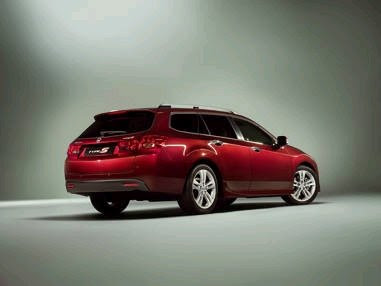
New Accord 180 PS Diesel Type-S
Honda S2000 Ultimate Edition
CR-Z Sports Hybrid Concept and FCX Clarity Show Honda's Future

ASIMO, Honda's advanced humanoid robot, will help launch the all new Insight Hybrid at the 2009 Geneva Motor Show.

The new Insight, which will makes its European debut at the Show, has been designed to offer a practical five-seat family car at an affordable price with excellent fuel economy and low CO2 and other emissions.

Honda's latest hybrid vehicle revives the Insight nameplate which was first used in 1999. It also marks a return for Honda to producing hybrids in a dedicated aerodynamic body, designed to optimise the performance of the efficient petrol-electric hybrid drivetrain.

The Insight combines an optimised 1.3 litre i-VTEC engine with a compact thin electric motor. The electric motor acts as a generator during deceleration, recovering energy that is otherwise lost as heat from the brakes. This energy is stored in the batteries and then used to support the combustion engine during acceleration to save fuel and increase efficiency.

The Insight has been designed to give good real world emission and fuel economy figures. Its key element is the Eco Assist system that is fitted as standard. The upper instrument cluster where the speedometer is sited, features a colour changing ambient light that illuminates green when driving ecologically, blue/green when the car is being driven acceptably and blue when driving with less regard for economy.

The ambient lighting of the speedometer combines with a bar diagram which is more than a simple instantaneous economy meter. The display in the centre of the rev counter shows how aggressively the driver is accelerating or braking and encourages the driver to stay towards the middle with lighter more progressive use of the brake and accelerator pedals.

To chart progress, during each journey leaves will appear on the bare stems of the plant icons on the centre meter if the driver is matching the ecological driving conditions ideal.

The display also keeps the driver informed of their progress through the stages of ecological driving over the lifetime of the car. At the end of each journey the driver is given a score which they can build up over time to chart progress. Over time the driver will be presented with trophy symbols for continued economical driving, or a wilting plant symbol if they regress into less efficient driving.

The Insight has been designed to offer a practical family car at an affordable price with excellent fuel economy and low CO2 and other emissions. The Insight gives seating for five and a boot capacity of 408 litres with the seats up. The repackaging of the IPU and batteries means the Insight has seats which fold almost flat, increasing the boot capacity to 1017 litres*.

The practical interior is complimented by an attractively styled and aerodynamically profiled body, which helps the Insight to achieve 101 g/km CO2 emissions and 4.4l/100km fuel consumption under the EU combined test procedures.

The Insight will go on sale in Europe from the end of March 2009 and pricing information is available from each country's Public Relation representative.

For the full Insight press pack please click HERE.

The new ASIMO
The host of the Honda stand will be the world's most advanced humanoid robot, the new ASIMO. This ASIMO robot is the latest in a long line of robots from Honda which began with the E0 robot in 1986. It will be helping to demonstrate the Insight's abilities. ASIMO has evolved over the years to enable it to run, recognise people and objects, climb stairs and even carry and deliver drinks.

ASIMO has become a symbol for Honda's advanced non-automotive research and is the culmination of more than 20-years of continuous development. Honda's dream is that one day ASIMO will become so advanced that it can truly help people.

At Geneva ASIMO will interact with a human host showing the versatility of the new Insight. ASIMO has proved to be hugely popular with crowds across the globe and has appeared at motor shows, science exhibitions and even at the New York Stock Exchange on Wall Street.


180 PS i-DTEC Engine for Accord Sedan and Tourer
Alongside the Insight and ASIMO will be the introduction of the new 180PS derivative of the acclaimed Honda i-DTEC diesel engine. This new higher-power variant produces 180 PS at 4000 rpm, a 30 PS increase over the standard i-DTEC engine with the peak power coming at the same rpm. Torque has also increased 30 Nm to 380 Nm at 2000 rpm.

The enhanced engine will be fitted to the Accord in a new Type-S variant. As well as the significant increase in power this new model will gain new lower bumper sections, front chin spoiler, sill extensions, smoke chrome finished grille. The new model will be available in two new paint colours with White Pearl and Basque Red joining the current colour line up. Complimenting this suite of cosmetic changes will be clear indicator covers to further distinguish the new Type-S model. In addition, this model will be equipped with a new design of 18" alloy wheels, giving the Type-S a more sporting stance.

The new engine retains its 2.2 litre capacity and gains its additional power with a revised turbo-charger housing, enlarged intercooler, stronger con-rods and a revised cylinder head. These modifications release the full potential of the critically acclaimed i-DTEC engine, allowing it to deliver excellent usable performance and good fuel economy.

Performance, fuel economy and emissions data will be available once homologation is completed. The Type-S goes on sale in some European markets from this summer.


S2000 Ultimate Edition
The final model of the Honda S2000 range; the Ultimate Edition will go on sale from March 2009 in Europe. This limited edition has been produced to mark the end of production for the award winning sports car.

The Ultimate Edition retains its highly acclaimed 2.0 litre 9000 rpm VTEC engine and combines it with a Grand Prix White body and graphite coloured alloy wheels. The shade of the paint evokes the colour first used on Honda's 1964 F1 car and many sporting models since. The exterior colour combination with the dark metal alloy wheels and unique black S2000 badging gives a fresh look to the timeless shape of the roadster body.

The white exterior will be matched with a red leather interior and complimented by unique red colouring for stitching on the gear lever gaiter. Ultimate Editions will be marked out by their unique numbered plaques on the kickplates, denoting their position in the series.

As the name suggests, the Honda S2000 Ultimate Edition will be the last version before global production of the model ceases production altogether at the end of June 2009.


FCX Clarity and CR-Z Concept
Joining the new models at Geneva will be the CR-Z Hybrids Sports Concept that gives an impression of the model that will join the Insight and Civic in the Honda line-up of compact hybrids. The production model, which will be based on this sporty 2+2, will offer something completely new to the hybrid market when the production model is launched in 2010. The compact sports concept demonstrates the flexibility of the unique Honda IMA hybrid system, which can be combined with a number of engine and transmission options in a range of body styles.

CR-Z
‘CR-Z' stands for ‘Compact Renaissance Zero'-an expression intended to capture the idea of a renaissance in the design of compact cars that begins anew from fundamentals.

This design research model of a lightweight hybrid sports car features advanced technologies that deliver enjoyable driving for all while reducing the vehicle's environmental footprint.
Exterior design
Designed to be ‘Futuristic and Dynamic', the CR-Z combines powerful performance in a compact form with a futuristic image. For its frontal view, an over-sized grill with a high-performance look is offset by openings on each side that lighten the overall feel. In the rear, tube-shaped rear combination lamps ensure better rearward visibility. Design details emphasising the CR-Z's advanced image include door mirrors that provide high visibility in a stylish form, LED headlights patterned after luminous bodies to convey a sharp impression, and jaunty fin-shaped sub-lights. Large, 19-inch wheels give a strong sporting stance and hint at the sporting dynamics of the chassis. The high tail with split level glass, shallow rake of the roof and kamm-style tail evoke the spirit of the CRX as well as linking the design to Honda's environmental cars the Insight and FCX Clarity.

Interior design
The goal with the interior design was to create an all-new sporty interior that fuses the liberating feel of spaciousness with an advanced interface that enhances driving pleasure. Mesh material on a simple framework construction is used throughout the interior to convey a light, sophisticated image without being oppressive. In the cockpit, the meter unit conveys the image of advanced technology ensconced in a piece of glass artwork, offering the functionality of immediate recognition while enhancing the driving experience with a futuristic feeling.


Honda FCX Clarity
Alongside the CR-Z, will be Honda's production fuel cell car the FCX Clarity, now in the hands of customers in the US, including Hollywood Film Producer Ron Yerxa and actress Jamie Lee Curtis.

The FCX Clarity is a next-generation, zero-emission, hydrogen-powered fuel cell vehicle based on an entirely new Honda V Flow fuel cell platform, and powered by the highly compact, efficient and powerful Honda V Flow fuel cell stack. The latest FCX features tremendous improvements to driving range, power, weight and efficiency and boasts a low-slung, dynamic and sophisticated appearance, previously unachievable in a fuel cell vehicle. The FCX Clarity is a significant landmark as Honda continues building the real-world performance and appeal of the hydrogen-powered fuel cell car.

Honda has begun leasing the FCX Clarity to a limited number of retail consumers in California, with the first vehicles having been delivered in the summer of 2008. In addition some companies and institutions in Japan are being leased the world's first production fuel cell car. Among those to receive the second generation of Honda's fuel cell car will be the LA-based Spallino family who were the world's first hydrogen family when they began leasing a previous generation FCX in June 2005.


How the FCX Clarity works
The FCX Clarity utilises Honda's V Flow stack in combination with a new compact and efficient lithium ion battery pack and a single hydrogen storage tank to power the vehicle's electric drive motor. The fuel cell stack operates as the vehicle's main power source. Hydrogen combines with atmospheric oxygen in the fuel cell stack, where energy from the reaction is converted into electric power used to propel the vehicle. Additional energy is also generated through the capture of kinetic energy from vehicle braking and deceleration (regenerative braking), which is stored along with surplus energy from the fuel cell in the lithium ion battery pack, and is used to supplement power from the fuel cell, when needed. The vehicle's only emission is water.


Honda V Flow FC Stack
The V Flow FC Stack features an entirely new cell structure that achieves a higher output of 100kW, smaller size and lower weight, with a 50% improvement in output density by volume, and a 67% increase in output density by mass, compared to the previous Honda FC stack.

Improved Startup Capability at Low Temperatures
Improved water drainage due to the V Flow cell structure facilitates better output immediately after startup. The reduced coolant volume and single-box design made possible by the wave flow-channel separators results in heat mass 40% lower than previous stacks. As a result, startup is possible at temperatures as low as -30° C.

Honda V Flow Fuel Cell Platform
The FCX Clarity's revolutionary V Flow platform packages the ultra-compact, lightweight and powerful Honda V Flow fuel cell stack in the vehicle's centre tunnel, between the two front seats. The compact size of the new V Flow FC Stack allows for a more spacious interior and more efficient packaging of other powertrain components, which would otherwise be unattainable in a sleek, low-slung sedan.

FCX Clarity Design
More than just a fuel cell vehicle - the FCX Clarity portrays Honda's vision of the future of automobile design and performance freed from the constraints of conventional powertrain technologies. The FCX Clarity's four-door sedan platform features a short-nose body and spacious cabin with comfortable accommodation for four people and their luggage. Major powertrain components - including the electric motor, fuel cell stack, battery pack and hydrogen tank - have been made more compact are distributed throughout the vehicle to further optimise space, comfort and total vehicle performance.

Advanced Materials and Components
In keeping with its theme as an environmentally-advanced automobile, the FCX Clarity features seat upholstery and door linings made from Honda Bio-Fabric - a newly-developed, plant-based material that offers CO2 reductions as an alternative to traditional interior materials, along with outstanding durability and resistance to wear, stretching, and damage from sunlight.

Designed to appeal to forward-thinking customers seeking the ultimate in zero-emissions, alternative-fuel vehicle performance, the FCX Clarity is also equipped with a full compliment of advanced safety, comfort and convenience features. These features consist of a rear view camera, Adaptive Cruise Control (ACC), Collision Mitigation Brake System (CMBS), a premium sound system, climate controlled seats and Bluetooth connectivity.

Other improvements, such as shift-by-wire, electric power steering (EPS), and a newly designed instrument panel with easy-to-read display of hydrogen fuel consumption, further improve its customer appeal and ease of operation.


Emissions
The FCX Clarity's only emission is water. CO2 emissions related to the production of hydrogen vary by source; however, well-to-wheel CO2 emissions using hydrogen reformed from natural gas - the most widely used method of production today - are less than half that of a conventional petrol vehicle. With the production of hydrogen from water by electrolysis, CO2 emissions can be further reduced and ultimately approach zero if the electricity is generated from sustainable sources, such as solar, wind, hydro or wave power

In the area of solar technology, Honda has developed its own solar cells, with half the CO2 emissions in the production stage compared to conventional crystalline silicon cells; and has begun mass-production and retail sales of this technology in Japan for both commercial and residential use. These panels are also used to generate electricity for the Torrance R&D refuelling station.


Fuel Cell Leadership
For 40 years Honda has worked hard to reduce the environmental impact of the automobile, including efforts to reduce emissions, boost fuel efficiency and, now, many industry-leading efforts to advance the hydrogen fuel cell vehicle - a technology and fuel that Honda believes may hold the ultimate promise for a clean and sustainable transportation future. Honda's pioneering achievements in this area include the first U.S. Environmental Protection Agency (EPA) and California Air Resources Board (CARB) certification of a fuel cell vehicle (2002); the first lease of a fuel cell vehicle (2002); the first fuel cell vehicle to receive an EPA fuel economy rating (2002); the first cold-weather customer (2004); the first and still only individual retail customers (2005, 2007).

Tuesday, February 17, 2009

Honda ready for a world beyond gas

The hydrogen fuel-cell-powered Honda FC Sport design study model makes its Canadian public debut today at the 2009 Canadian International Auto Show in Toronto.

The oddly configured three-seat sports-car concept is designed to show the flexibility and potential of Honda's V Flow fuel-cell technology -- already deployed in the Honda FCX Clarity sedan.

"The Honda FC Sport explores new ways to satisfy automotive performance enthusiasts in a world beyond petroleum," said Jerry Chenkin, executive vice-president of Honda Canada.

"People who enjoy sports cars will not be forgotten by Honda in a hydrogen-powered future."
The high-output powertrain and a sleek, aerodynamic body contribute to the vehicle's performance potential. The majority of vehicle mass is distributed between the axles, creating the balanced weight distribution sought after in sports cars.

Source;
http://www2.canada.com/theprovince/news/driving/story.html?id=cf75dbc8-d52e-44b4-b423-050a5c7ee697